The news
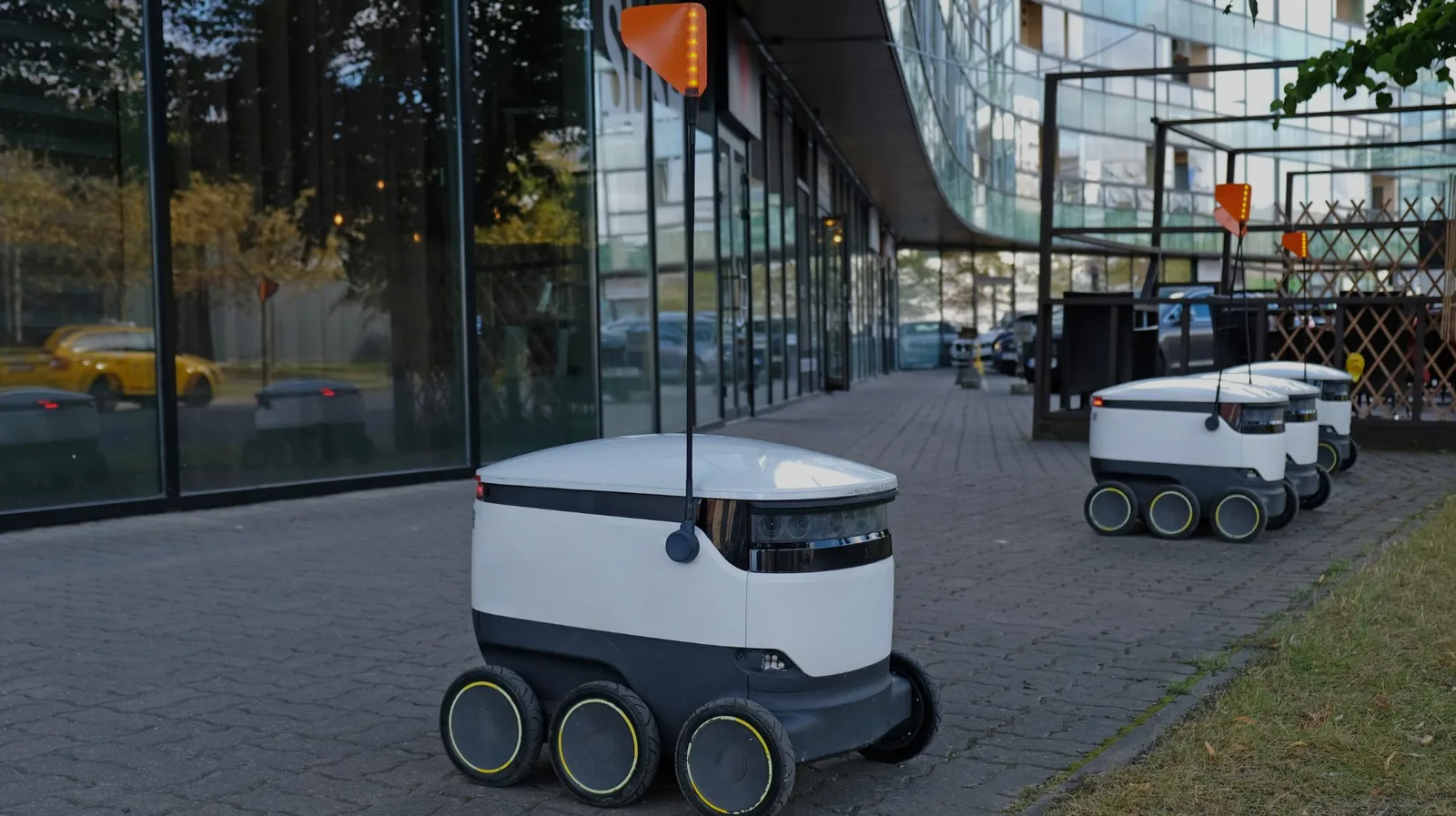
“Serve Robotics” and “DoorDash” launched food delivery robots in Australia on 29 October 2026. “Serve Robotics” runs delivery robots, and “DoorDash” is a food ordering app. These four-wheeled robots move along the sidewalk and bring the food to the customer. The service starts in the “Gold Coast” in the state of “Queensland”. “DoorDash” says the robots deliver nearby orders. Human drivers still deliver the orders that are farther away. “Serve Robotics” has more than 2,000 robots in the United States. Australia is the first other country where this company operates.
How the food delivery robot from “Serve Robotics” could hurt the Earth
- Certain: In June 2024 a researcher at “UCLA” calculated the pollution of a delivery robot. The researcher counted only the electricity the robot used. The building of the robot and its battery was not counted.
- Certain: “Coco Delivery” ordered this study. The robots the researcher studied belonged to this company. They worked in “Los Angeles”, not in the “Gold Coast”.
How the food delivery robot from “Serve Robotics” could help the Earth
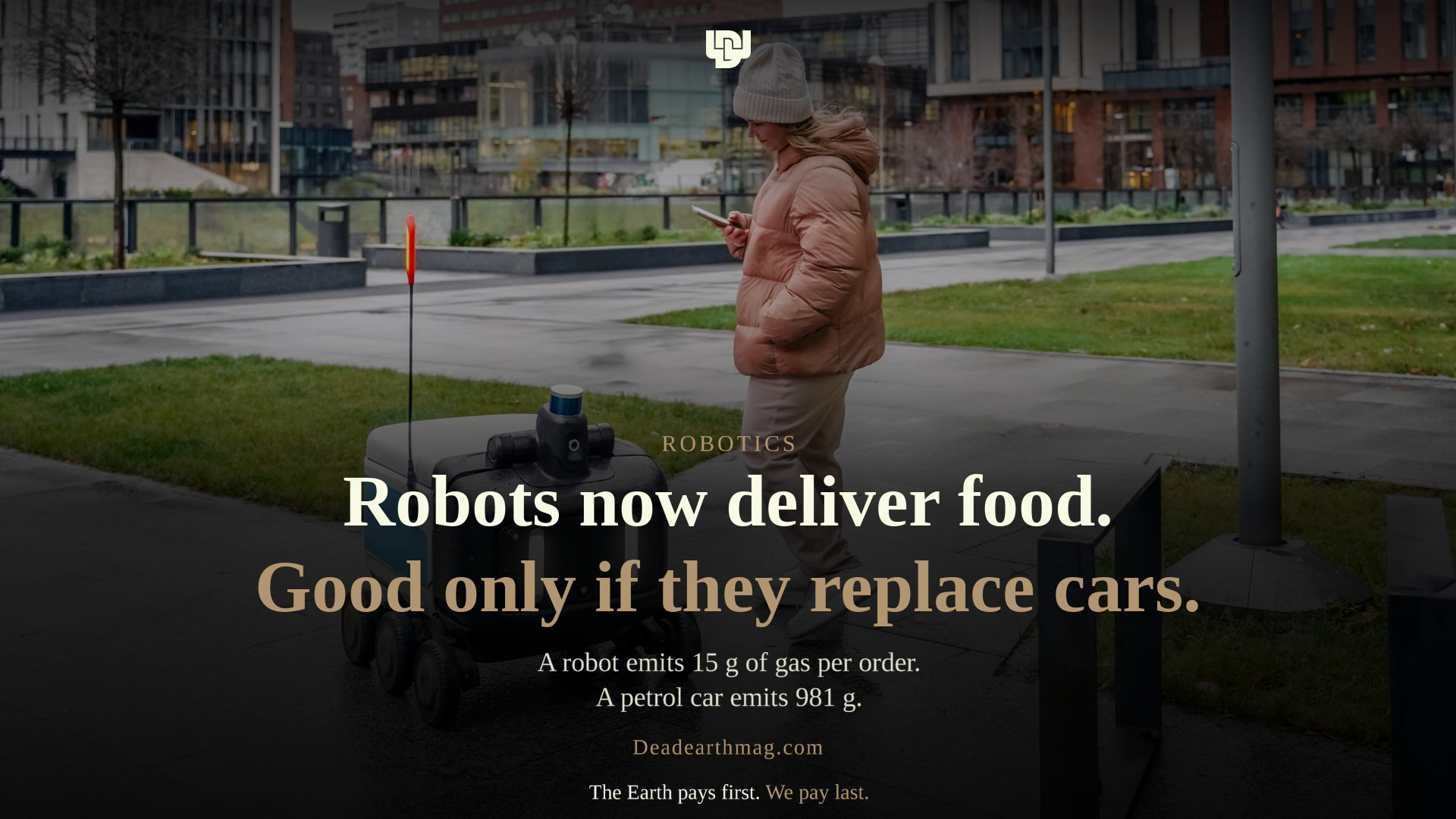
- Probable: The same study says a robot emits about 15 grams of greenhouse gas per order. A petrol car makes a trip for each order and emits about 981 grams. An electric car emits about 155 grams. The study counts the electricity with the power plants of “California”.
- Our estimate: A robot emits about 15 grams of gas for every order. A petrol car emits about 981 grams for the same order. So the robot helps the Earth only when it replaces a car. Our maths: the robot must replace a petrol car in 2 of every 100 orders. Then less gas enters the air. For an electric car, the number is 10 of every 100 orders. Which one does the “Gold Coast” have? How many of every 100 orders would go by car without the robot?
Our conclusion
For the Earth, a sidewalk robot beats a car or motorbike on short trips. This is true only when the robot really replaces a car or motorbike trip. When the robot replaces the customer’s walk, it gives no benefit. When it only creates more orders, it gives no benefit either.
We suggest that the two companies publish two numbers after six months. The first number is how much electricity each robot has used for each order. The second number is how many car trips the robots have replaced.
Tell us what you think
Should sidewalk robots work in your city? Write to us. More in Robotics. New here? Read our Introduction.
Sources
- Medianet, Serve Robotics and DoorDash launch Australia’s First Footpath Delivery Robots on the Gold Coast, 29 October 2026.
- SmartCompany, Watch your toes: DoorDash launches Gold Coast delivery robot, 29 October 2026.
- Reuters, Serve launches robot deliveries in Australia in first international push (SRN News copy), 28 October 2026.
- Chu, The Impacts of Sidewalk Autonomous Delivery Robots on Vehicle Travel and Emissions, UCLA Institute of Transportation Studies, June 2024.