
The news
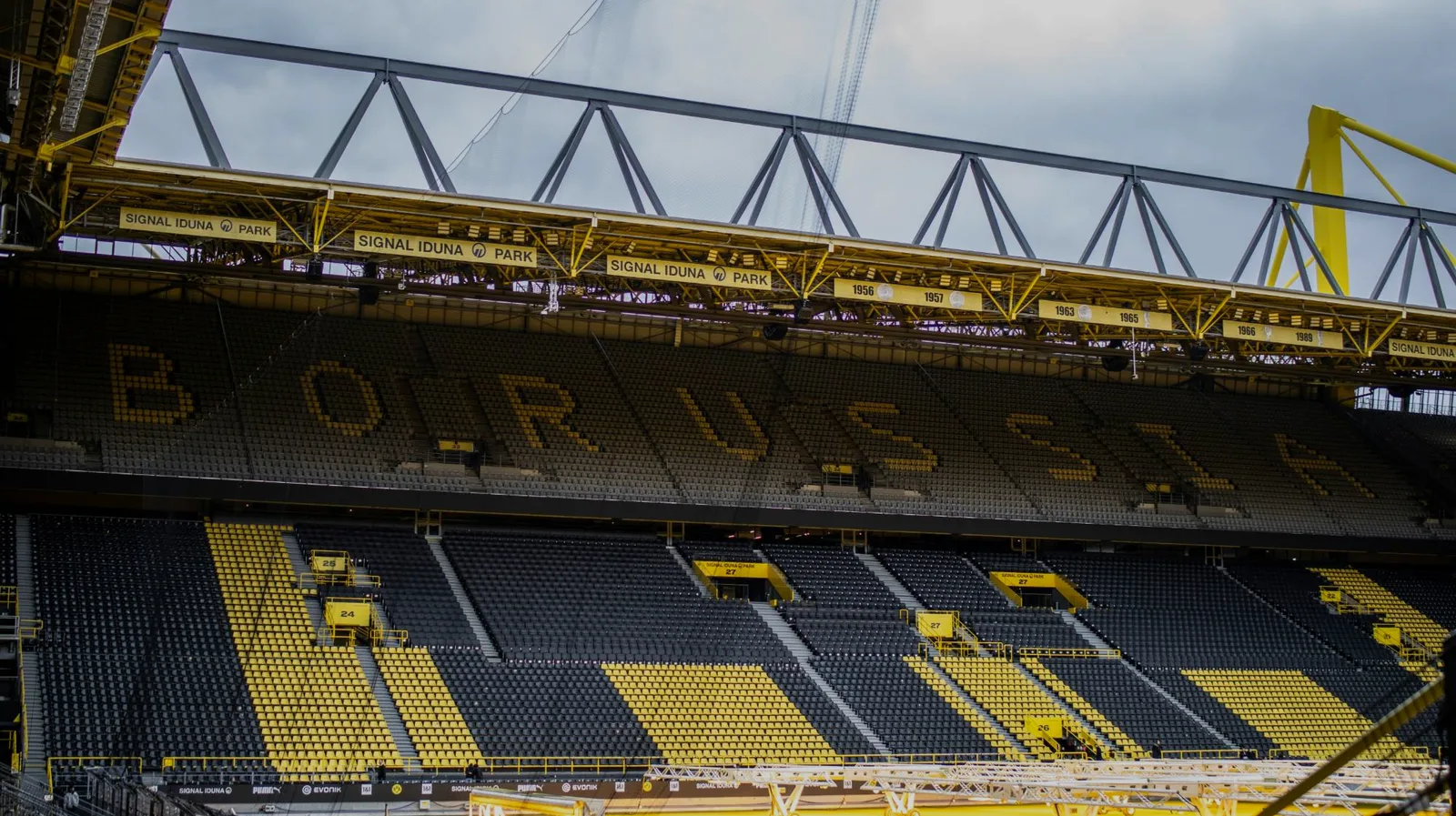
The energy company RWE and the football club Borussia Dortmund switched on a stadium battery at Signal Iduna Park in Germany on 26 October. The battery has 3.7 megawatts of power and 3.7 megawatt-hours of capacity, so it can supply full power for a little over an hour. It works like a tank: at midday, when the solar panels on the stadium roof make more electricity than the stadium needs, the battery stores the extra; in the evening, or when the floodlights switch on, it gives that electricity back to the stadium. The roof’s 11,132 solar panels have worked since December 2025.
How a stadium battery could hurt the Earth
- Our estimate: making the battery itself produces greenhouse gases. A 2019 study by the Swedish institute IVL puts common car batteries at 61 to 106 kg of greenhouse gases (measured as CO2 equivalent) for each kWh of capacity. If the stadium battery is like a car battery, making it produced about 230 to 390 tonnes of greenhouse gases.
How a stadium battery could help the Earth
- Certain: producing one kWh of electricity on Germany’s grid emitted 344 g of CO2 on average in 2025 (German Environment Agency). Each kWh of the stadium roof’s solar power used in place of grid electricity avoids that amount.
- RWE says: the solar panels on the stadium roof emit about 1,700 tonnes less CO2 a year than the stadium’s earlier power supply.
- Our estimate: each time the battery is filled and its electricity is used in place of grid electricity, about 1.3 tonnes less CO2 is emitted (3,700 kWh × 344 g). At 100 times a year, the pollution from making the battery is paid back in two to three years.
Our conclusion
For the Earth, solar power with a battery is better than the old path, which is taking all of the stadium’s electricity from the grid. But the benefit of this battery itself is small: most of the cut in pollution comes from the solar panels on the stadium roof.
We suggest that RWE and Borussia Dortmund publish the cost of the battery and the amount of CO2 it saves each year.
Tell us what you think
Would a battery and solar panels suit a building near you? Write to us. More in Sustainability. New here? Read our Introduction.
Sources
- pv magazine Deutschland, RWE und Borussia Dortmund nehmen Batteriespeicher am Signal Iduna Park in Betrieb, 26 October 2026.
- photovoltaik.sh, Inbetriebnahme des Großbatteriespeichers am Signal Iduna Park, 27 October 2026.
- RWE, World record for BVB and RWE, 21 November 2025 (solar roof, battery capacity and 1,700 tonnes of CO2).
- German Environment Agency (Umweltbundesamt), CO₂-Emissionen pro Kilowattstunde Strom 2025, 23 March 2026.
- IVL, New report on climate impact of electric car batteries, report C 444, November 2019.