The news
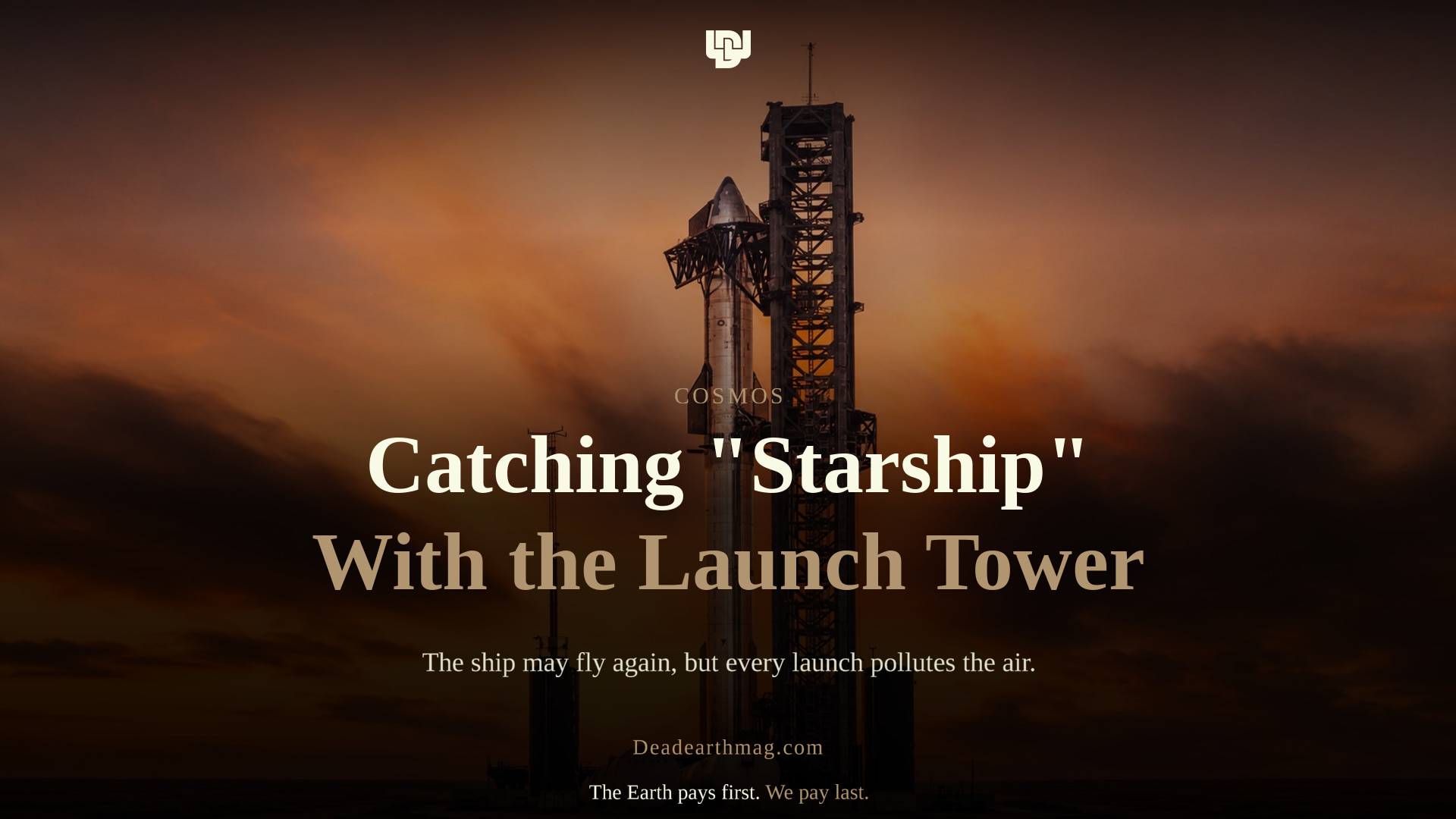
On 14 November 2026, “SpaceX” caught the upper part of “Starship” with a tower. The part had come back from orbit. “Associated Press” says this is the first controlled landing of an orbital rocket’s upper part.
“Starship” has two parts: “Super Heavy” at the bottom and the ship on top. The flight began on 13 November in “Texas”. The ship flew for about 22 hours and circled the Earth 14 times. It also released 26 “Starlink” satellites in orbit.
“Super Heavy” was meant to return to the tower. “SpaceX” says the engines of “Super Heavy” shut down too early. This part exploded over the Gulf of Mexico before it reached the water.
How catching “Starship” with a tower could hurt the Earth
- Certain: Flight 15 began in “Texas”. But “Florida” is also building a pad for this rocket. The US Federal Aviation Administration (FAA) assessed this pad in January 2026. The plan is 44 launches a year.
- Certain: By the FAA’s calculation, construction and launches release 385.66 tonnes of nitrogen oxides a year. This gas is an air pollutant. The figure is 54% above the FAA’s 250-tonne mark. The same review found no major effect on the climate.
- Our estimate: Of the 385.66 tonnes, 374.55 come from launches and landings and 11.11 from construction. Dividing 374.55 by 44 launches gives about 8.5 tonnes per launch. With the 11.11 tonnes of construction, the 250-tonne mark is passed after about 28 launches. Assumption: each launch counts equally, with its landings and engine tests. The pad is designed for 44 launches, which is 16 above that mark. Is a ship that flies again worth this air?
How catching “Starship” with a tower could help the Earth
- Certain: On 28 September 2026, flight 14 used ship number 41. That ship landed on the water of the Pacific Ocean. Flight 15 used ship number 42. The tower caught this ship.
- The company “SpaceX” says: Its goal is a rocket that flies again fully and quickly. If the caught ship flies again, it replaces the building of a new ship.
Our conclusion
For the Earth, reuse is better. A ship should not land in the sea each time. But each launch puts nitrogen oxides into the air. So this path is better only if the ship really flies again.
We suggest that “SpaceX” publish each year how many times each ship has flown. The FAA should also measure the nitrogen oxides of each launch and publish them.
Tell us what you think
If 44 launches a year took place near your city, would you accept them? Write to us. More in Cosmos. Related story: The New “Globalstar” Satellites for Phones. New here? Read our Introduction.
Sources
- AP, SpaceX catches Starship after orbit in historic first as booster explodes over Gulf, 14 November 2026 (republished by ABC News 4).
- New Space Economy, Starship Flight 15: historic spacecraft catch, successful satellite deployment and a lost booster, 14 November 2026.
- Space.com, SpaceX Starship Flight 15 live updates, 14 November 2026.
- GCN, Starship reaches orbit for the first time, deploying 26 Starlink V3 satellites on Flight 14, 28 September 2026.
- FAA, Starship-Super Heavy LC-39A Final EIS, Executive Summary, January 2026.