The news
The American company “Globalstar” says France has approved its third-generation satellites. The company announced this on 9 November 2026. The system is called “C-3”.
The French Ministry for Digital allows the use of radio frequencies for 20 years. The French Ministry for Space allows launching and operating the satellites for 13 years. That is the design life of the satellites.
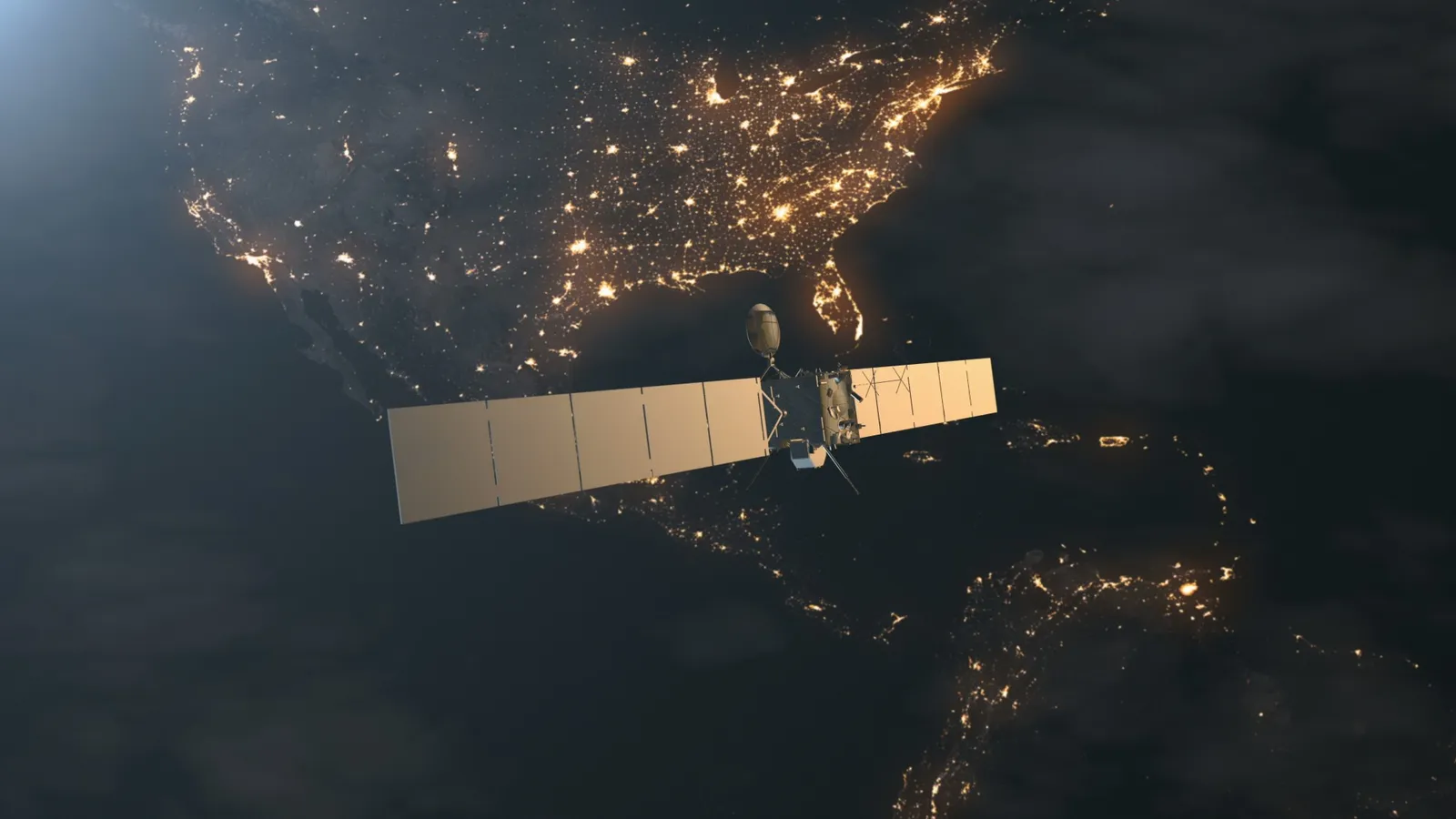
The “C-3” system has 48 working satellites and 6 spares. All of them circle the Earth at an altitude of 1,414 km. The satellites send messages straight to phones. The company “MDA Space” builds them. The launch is planned for 2027.
The United States also approved the system on 19 October 2026. The Federal Communications Commission set a condition: at least 24 satellites must work by 11 October 2032. “Globalstar” says the system now has approval in more than 20 countries.
How the “C-3” satellites could hurt the Earth
- Certain: On 16 August 2024, the Federal Communications Commission wrote: the failure of even one satellite at the working altitude of “Globalstar” creates long-term debris. “C-3” works at the same altitude.
- The company says: Suppose a satellite at about 700 km loses control completely. It takes 863 years to return to the atmosphere. “NASA” software does not calculate beyond the year 2100. So the company could not calculate the chance of a collision in this case.
- Certain: The same commission wrote: the plan for the first-generation satellites was to leave them in a graveyard orbit. This orbit is at an altitude of about 1,514 km.
- Our estimate: Pieces of a satellite may reach the ground when it returns to the atmosphere. In 2024 “Globalstar” calculated for each replacement satellite: the chance of hurting one person is 1.95 in 100,000. That is about 1 in 51,000. Our assumption: the “C-3” satellites carry the same risk. With 54 satellites, the total risk is 54 times 1.95 in 100,000. That is about 1 in 950. The risk of one satellite is small. But with every new satellite, the sum of the risks grows. Is a messaging service for phones worth this risk?
How the “C-3” satellites could help the Earth
- The company says: It lowers the 2024 replacement satellites from 1,414 km with an electric thruster. The new orbit is one where a satellite reaches the atmosphere within 5 years. The first-generation satellites were left in a high orbit. The new plan is better than leaving them there. This plan is for the 2024 replacement satellites, not for “C-3”.
- Certain: The Federal Communications Commission requires “Globalstar” to report every 6 months: which satellites came close to each other. For the 2024 replacement satellites it also set a condition: every failure to lower a satellite must be reported within 10 days.
Our conclusion
For the Earth, lowering a satellite within 5 years is better. Leaving it in a high orbit is worse. But a satellite that fails at a high altitude is a danger. The company calculated 863 years for an altitude of 700 km. The working altitude of “C-3” is higher than that.
We suggest that “Globalstar” publish its plan for removing the “C-3” satellites. It should also report each year how many satellites it lowered after their service.
Tell us what you think
Should companies publish their plan for removing satellites before launch? Write to us. More in Cosmos. New here? Read our Introduction.
Sources
- Globalstar, France Authorizes Globalstar’s Third Generation C-3 System for International Operations, 9 November 2026 (press-release text on Stock Titan; 20 and 13 years, 48 and 6 satellites, 1,414 km, more than 20 countries).
- SpaceNews, Globalstar approved to deploy next-gen direct-to-device constellation, 9 November 2026 (French approval, 54 satellites, launches from 2027).
- Via Satellite, FCC Authorizes Globalstar’s C-3 Constellation for Direct-to-Device, 19 October 2026 (US approval, “MDA Space”, messages straight to phones).
- SatNews, FCC Grants Globalstar Authorization for Third-Generation C-3 Satellite System, 20 October 2026 (the 11 October 2032 condition and the report every 6 months).
- SpaceQ, Globalstar updates FCC on its planned C-3 satellite constellation, 5 January 2026 (same working orbit as the earlier satellites).
- FCC, Order and Authorization DA 24-825, 16 August 2024 (long-term debris, 863 years, graveyard orbit at 1,514 km, electric thruster and 5 years, risk of 1.95 in 100,000, report within 10 days).