The news
The Chinese company “UBTech” signed a cooperation deal with “Yongda” on 11 November 2026. “Yongda” sells cars in “Shanghai”.
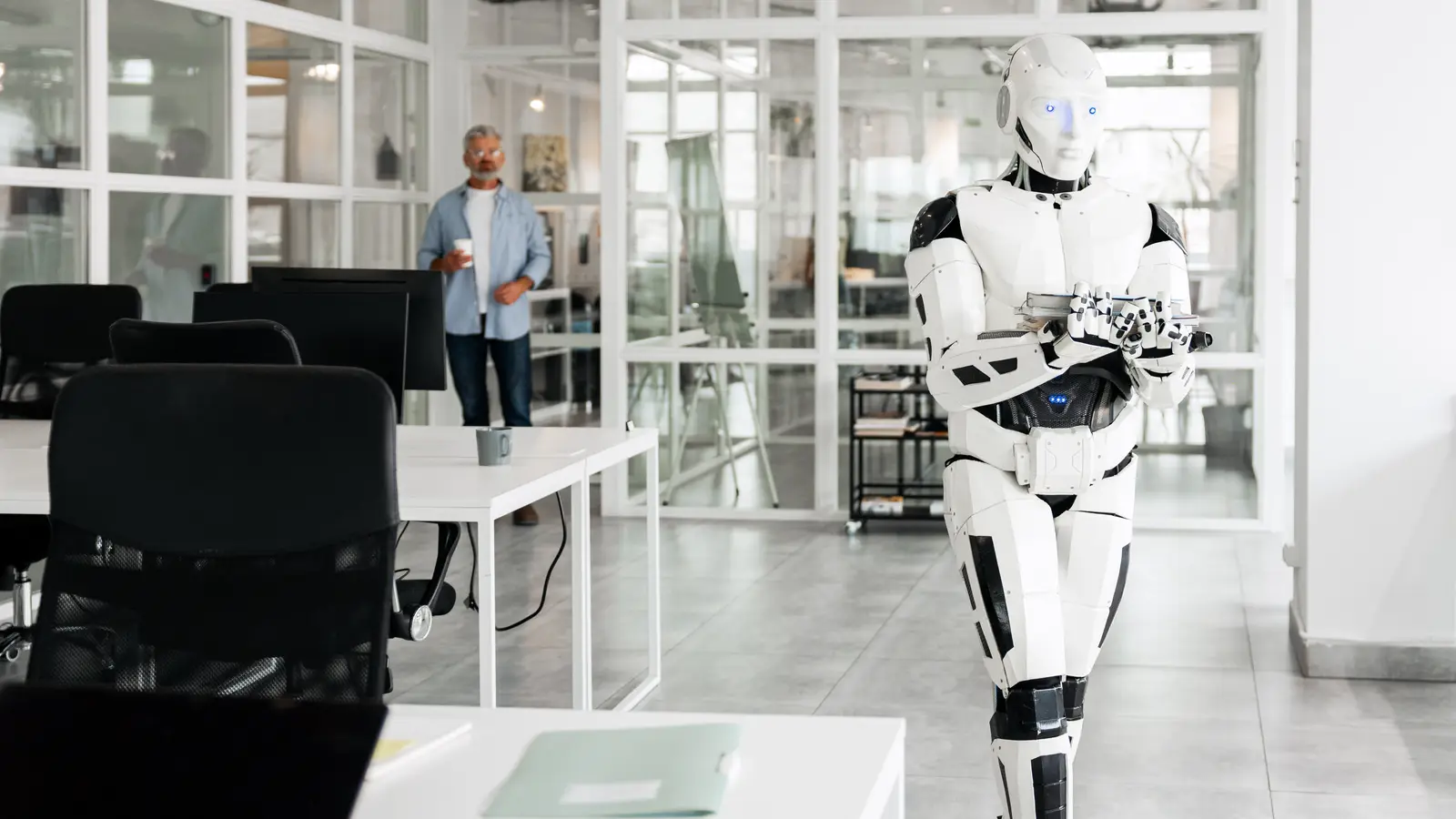
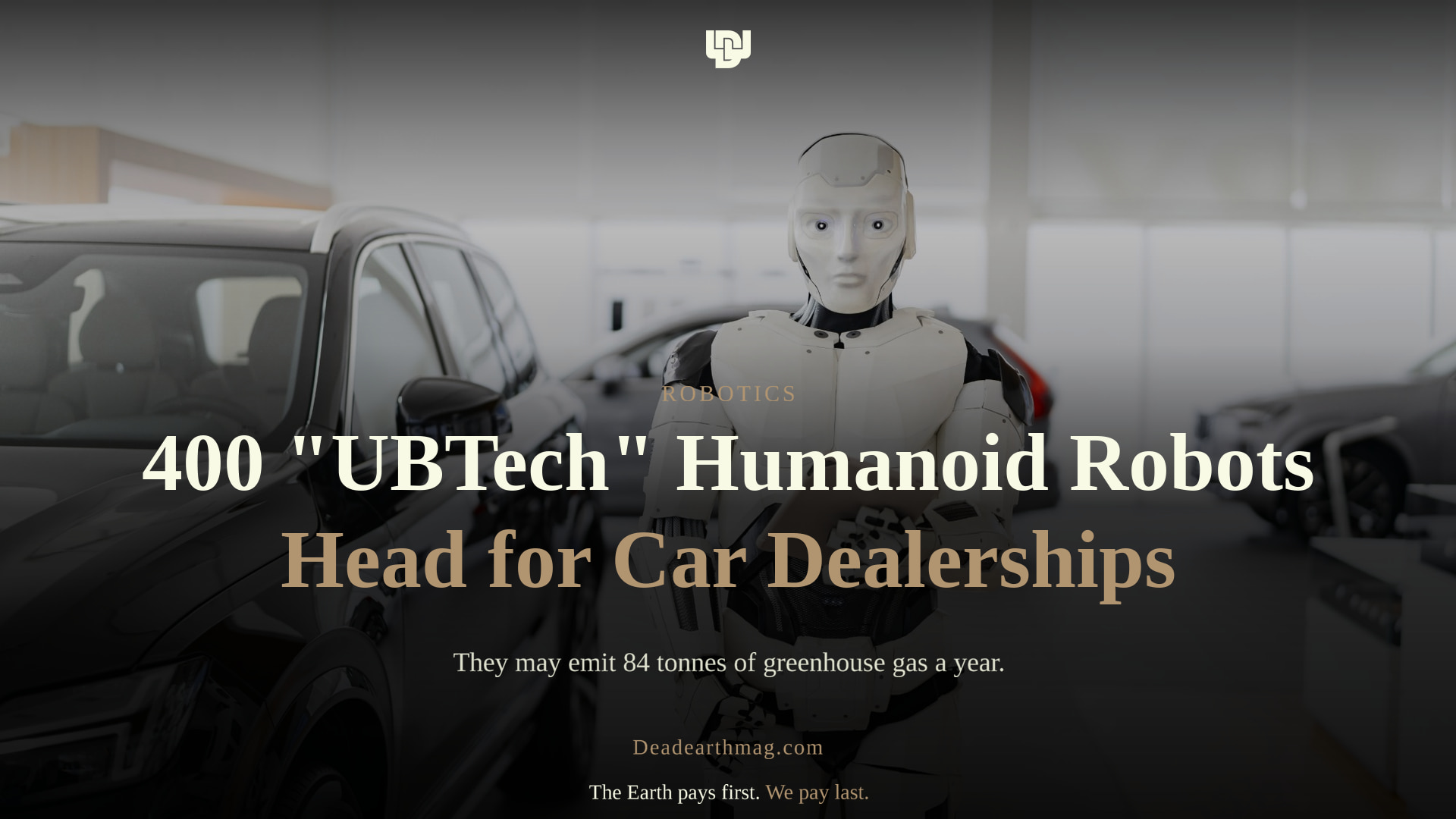
“Yongda” will buy 400 “U1 Pro” humanoid robots from “UBTech”. “UBTech” says it will deliver the robots by the end of this year. The robots will present products in car dealerships and serve customers.
In the online store “JD”, each “U1 Pro” costs 169,800 yuan. At this price, the media put the order’s value at about 67.9 million yuan. The two companies also want to build a robot showcase centre for “UBTech” in “Shanghai”.
How humanoid robots could hurt the Earth
- The company says: One full charge of the “U1 Pro” lasts up to 4 hours. Charging a switched-off robot takes up to 90 minutes. The robot also works while charging.
- Certain: A robot needs electricity to work. In 2024 China’s power plants emitted 0.5777 kg of greenhouse gas per kilowatt-hour. This is the national average. China’s environment ministry has published it.
- Our estimate: Our assumption: each robot draws 100 W. It works 10 hours a day in the dealership. Then each robot needs 365 kilowatt-hours a year. 400 robots together need 146,000 kilowatt-hours. This electricity emits 84 tonnes of greenhouse gas. The 100 W figure is our assumption, not the company’s. If each robot drew 200 W, the figure would double to 169 tonnes.
- The company says: Robots in this series weigh 35.2 to 42 kg. If 400 robots weigh this much, together they come to 14 to 17 tonnes. Each robot has a battery, motors and chips. Making all of this takes materials from the Earth.
How humanoid robots could help the Earth
- The company says: The robots’ work is presenting products, sales and customer service.
- Our estimate: Suppose each robot draws only 50 W. Then 400 robots emit 42 tonnes of greenhouse gas a year. That is half the figure above. But the robot is only added to the dealership. It does not replace anything else that uses power. Is this electricity worth it to show one robot to a customer?
Our conclusion
For the Earth, the old way is better: an employee who guides the customer. A robot needs extra electricity and materials. It does not replace anything else that uses power.
We suggest that “UBTech” publish the electricity use of each “U1 Pro”. It should also publish the size of its battery. “Yongda” should also announce each year the electricity its 400 robots use.
Tell us what you think
Does your car dealership need a humanoid robot? Write to us. More in Robotics. New here? Read our Introduction.
Sources
- China Securities Journal (Securities Daily, 证券日报), 优必选携手永达,首批400台超仿生人形机器人U1 Pro采购合同落地, 11 November 2026.
- The Paper (澎湃新闻), 优必选首次披露超仿生人形机器人大单,400台U1 Pro将进汽车门店, 11 November 2026 (the 169,800 yuan price and the order’s value).
- Börse Express, Ubtech Robotics Aktie: Yongda ordert erst mal 400 Roboter, 12 November 2026.
- 21st Century Business Herald (21财经), 99万元的陪伴机器人,续航仅4小时?优必选回应, 6 July 2026 (battery life and charging time).
- IT Home (IT之家), 优世界 U1 系列发布, weight and size of the “U1” series.
- China’s Ministry of Ecology and Environment, 2024年电力碳足迹因子数据公告, 24 October 2025.