The news
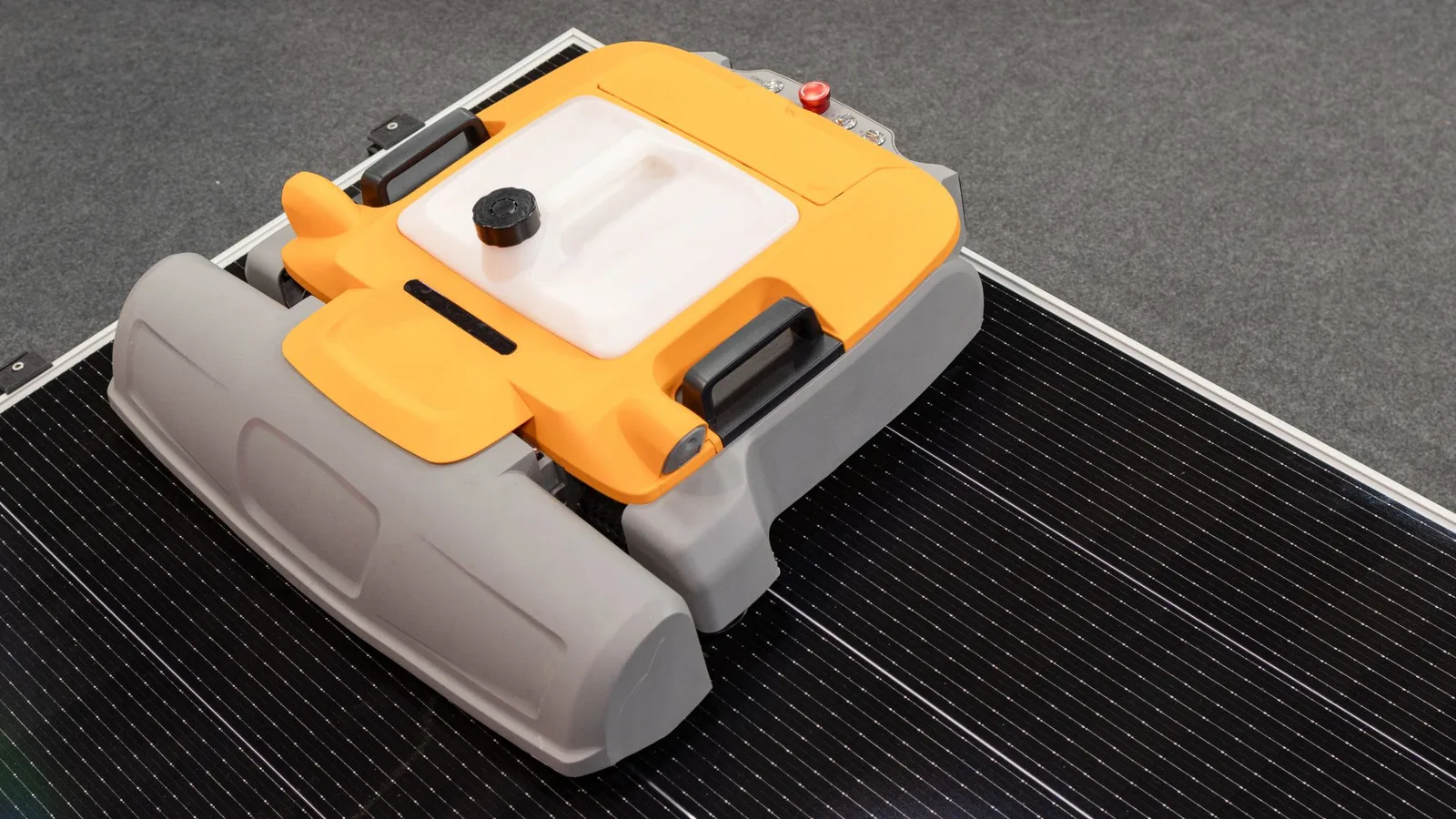
The energy company “ENGIE” and the startup “Solar Bot” built a solar panel cleaning robot. The robot works in Brazil without water. Reports on 18 and 19 November 2026 announced the test result.
Building the robot took about 18 months. “ENGIE” tested it at one of its own solar plants. The electricity output of this plant rose by 4.7% to 5.4%.
The robot worked for several days in a row. After each cleaning it returned to the charging station. No person took direct part.
Engineers from the “University of Brasília” founded “Solar Bot” in 2021. The project ran on 3.56 million reais from the research and innovation programme of “Aneel”. “Aneel” is the electricity regulator of Brazil.
How a solar panel cleaning robot without water could hurt the Earth
- The company “Solar Bot” says: The “Federal University of Rio Grande do Sul” checked the wear. It rated the risk very low. Panel power falls by at most 1% in 20 years. This rating covers the earlier robots of this company.
- The company “ENGIE” says: Outside bodies tested the pressure and vibration of the robot on the panels. The deformation of the panels stayed below the safety limit.
How a solar panel cleaning robot without water could help the Earth
- The company “ENGIE” says: Dust cuts up to 15% of the electricity of panels. The robot uses no water. “ENGIE” sees it as suited to plants with little water.
- Comparison with the old way: The old way is washing with water. The company “Solar Bot” says its earlier robots cleaned about 340,000 panels in 2024. The company says 1.5 million litres of water were saved. These figures are not for the “ENGIE” robot.
- Our estimate: Take a 100 MW plant. “Solar Bot” counts 340,000 panels as 170 MW. So each panel has about 0.5 kW. 4.7% to 5.4% more electricity equals 4.7 to 5.4 MW of new panels. That means 9,400 to 10,800 panels are not built. Assumption: the sunlight stays the same and the gain is the same everywhere. If dust cuts only 5%, the robot cannot return more than 5%. Is building one robot less harm to the Earth than building ten thousand panels?
Our conclusion
For the Earth, the dry robot is better than heavy washing. This is clearer for plants with little water. The condition is that the robot does not wear down the panel.
We suggest that “ENGIE” publish the name of the plant. It should explain how it measured the 4.7% to 5.4%. It should also announce the water saved in each cleaning. It should follow the power loss of the panels for several years.
This story shows that technology can be steered towards green. A robot can take more electricity from panels that already exist, not from new ones. We ask every new technology to say how much water and material it uses.
Tell us what you think
A solar plant stands near your city. Should its panels be washed with water or cleaned by a dry robot? Write to us. More in Robotics. Related story: Floating Solar Panels on “Florida” Stormwater Ponds. New here? Read our Introduction.
Sources
- pv magazine Brasil, ENGIE testa robô brasileiro que limpa painéis solares sem água e eleva geração em até 5,4%, 19 November 2026.
- Cenário Energia, ENGIE Testa Robô Autônomo Para Limpeza De Painéis Solares E Registra Ganho De Até 5,4% Na Geração, 18 November 2026.
- Agência Sebrae, Primeiro robô de limpeza de painéis solares a seco já economizou 1,5 milhão de litros de água, 23 December 2024.