The news
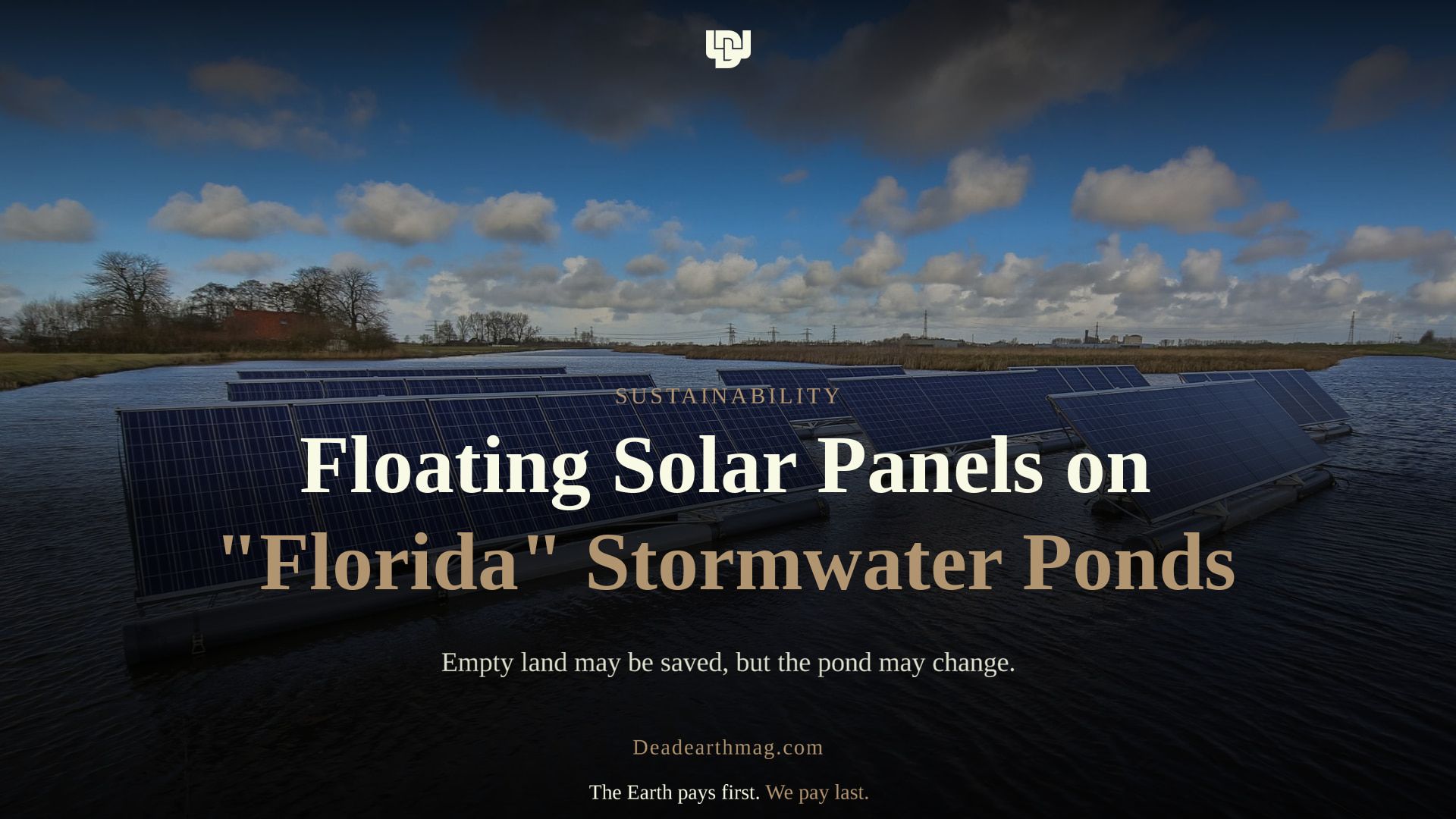
Floating solar panels are being placed on stormwater ponds in “Florida”. The news agency “Associated Press” reported this on 17 November 2026.
Researchers at the “University of Florida” estimate that the state has about 76,000 stormwater ponds. By 2012 data, these ponds cover about 2.7% of urban land.
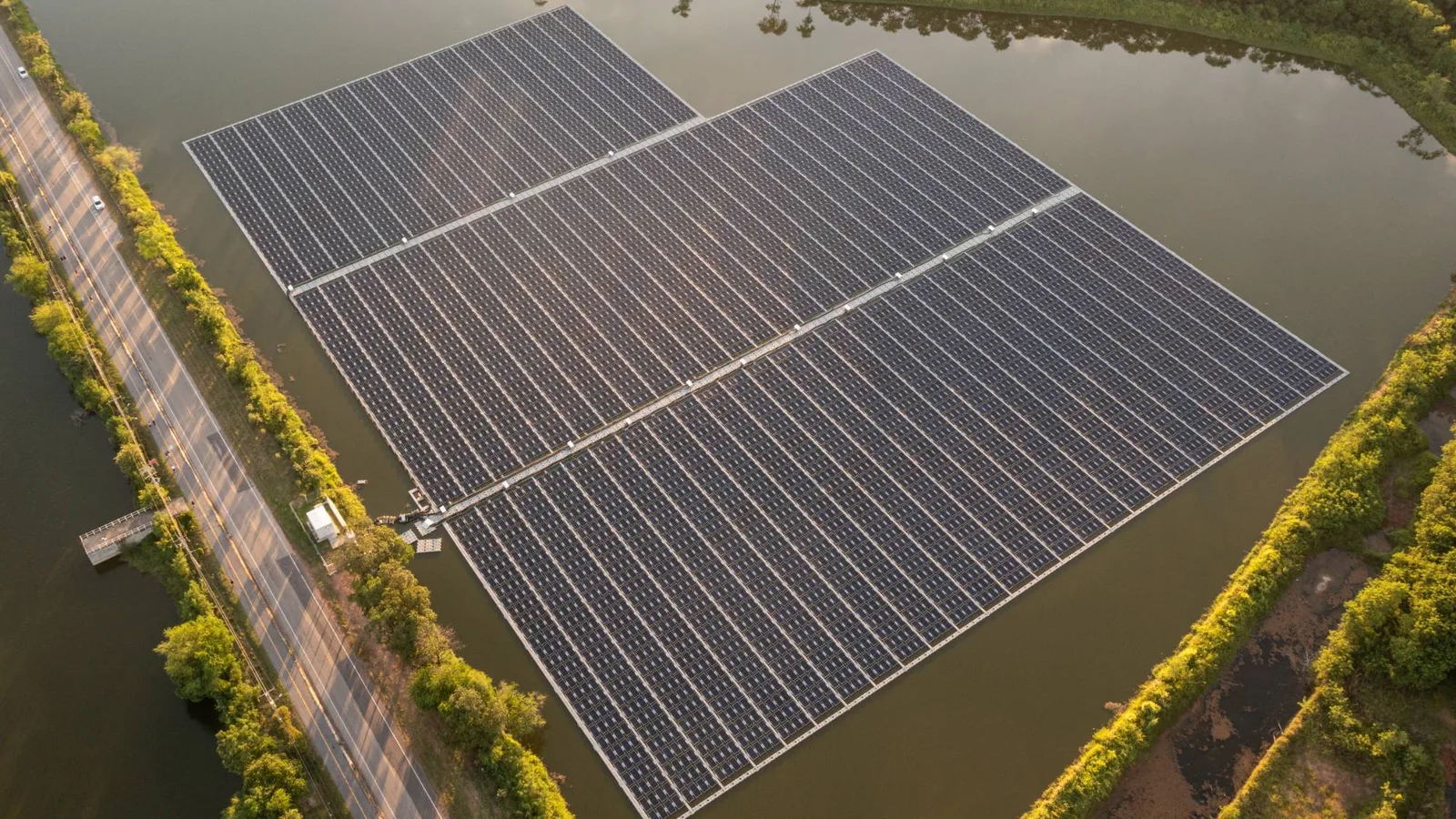
The power and water utility of “Orlando” launched a 2-megawatt floating plant in November 2025. The utility says it is the largest floating plant in “Florida”.
The company “D3Energy” signed a lease with the “Florida” transport department in May 2026. It is one lease for the whole state. It replaces buying pond by pond. Under it, only this company may build floating panels on the ponds beside highways.
“Oktoviano Gandhi” is an energy researcher in Qatar. He says floating solar worldwide passed 9.6 gigawatts by the end of 2024. That is under 1% of the world’s solar capacity.
How floating solar panels on “Florida” stormwater ponds could hurt the Earth
- Probable: A researcher at the “University of Florida” says the panels’ shade changes the pond’s photosynthesis. A stormwater pond works like a wetland and catches pollution from the water. Algae, underwater plants and the pond’s food chain may also change.
- Probable: “Rafael Almeida” of “Indiana University Bloomington” says covering the surface changes the water’s oxygen. There may be a limit after which the pond suddenly changes.
- The utility of “Orlando” says: It limits panel cover to 70–80% of each pond’s surface. No safe level of cover has been shown yet.
How floating solar panels on “Florida” stormwater ponds could help the Earth
- The company “D3Energy” says: The ponds beside “Florida” highways can hold over 1 gigawatt of floating panels. This avoids turning about 2,000 hectares of land into solar plants.
- Does it pay? “Gandhi” says the median cost of floating solar in 2024 was about $1.25 per watt. It is still 10–25% more than land panels. Verdict: a good idea, but it pays only where land is scarce or costly.
- Our estimate: With these two figures, land panels cost $1 to $1.14 per watt. For one megawatt, the gap is $110,000 to $250,000. “D3Energy” counts about 2 hectares of land per megawatt. So saving each hectare costs about $55,000 to $125,000 extra. These figures are global, not only for “Florida”. If land costs less than this, land panels are cheaper. Does a hectare of empty land near your city cost less than this?
Our conclusion
For the Earth, panels on a built pond are better than panels on new land. The condition is that the panels’ shade does not harm the pond’s water and life.
We suggest that the utility of “Orlando” and “D3Energy” measure the oxygen under the panels. They should publish the result each year. They should also state the cost per kilowatt-hour.
This story shows that technology can be steered toward green. A panel can sit where something is already built, not on new land. We ask every new technology to say what it takes from the Earth.
Tell us what you think
Should the ponds of your city also get floating solar panels? Write to us. More in Sustainability. Related story: Stadium Battery in Dortmund. New here? Read our Introduction.
Sources
- AP, Florida’s stormwater ponds become floating solar farms as costs fall and demand rises, 17 November 2026 (republished by The Press Democrat).
- POWER, OUC opens one of the largest floating solar arrays in the U.S., statement of “Orlando” utility, 6 November 2025.
- Solar Power World, Florida DOT leases potentially all its stormwater ponds for floating solar development, 19 May 2026.